 Smooth
STX
STX Dozen Practice Ball
A field hockey ball from STX for players at any level, with smooth for sand turf and grass and regulation size for training and play.
Compare dimple, smooth, match, training and weighted field hockey balls from Kookaburra, Grays, STX, CranBarry, TK and more. Every ball here meets the regulation 156–163 g standard unless it is labelled as a weighted training ball.
26 products · 11 brands · Updated October 2026SmoothA field hockey ball from STX for players at any level, with smooth for sand turf and grass and regulation size for training and play.
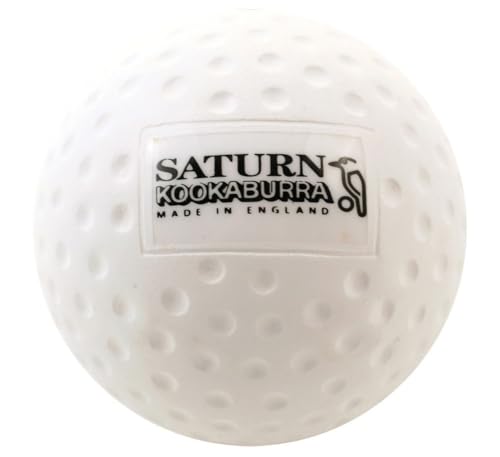 Smooth
Dimpled for water-based turf and regulation size for training and play — a Kookaburra field hockey ball made for players at any level.
 Dimple
d for water-based turf and regulation size for training and play — a Kookaburra field hockey ball made for elite players.
 Dimple
A dozen dimpled training balls, ideal for teams and coaches.
 Dimple
A field hockey ball from Kookaburra for players at any level, with dimpled for water-based turf and regulation size for training and play.
 Dimple
A field hockey ball from Kookaburra for players at any level, with dimpled for water-based turf and regulation size for training and play.
 Dimple
Kookaburra's field hockey ball for players at any level: dimpled for water-based turf and regulation size for training and play.
 Dimple
d for water-based turf and regulation size for training and play — a Kookaburra field hockey ball made for players at any level.
 Smooth
CranBarry's field hockey ball for players at any level: smooth for sand turf and grass and regulation size for training and play.
 Smooth
CranBarry's field hockey ball for players at any level: smooth for sand turf and grass and regulation size for training and play.
 Smooth
 for sand turf and grass and regulation size for training and play — a CranBarry field hockey ball made for players at any level.
 Smooth
CranBarry's field hockey ball for players at any level: smooth for sand turf and grass and regulation size for training and play.
 Smooth
A field hockey ball from CranBarry for players at any level, with smooth for sand turf and grass and regulation size for training and play.
 Smooth
CranBarry's field hockey ball for players at any level: smooth for sand turf and grass and pack of 6.
 Smooth
 for sand turf and grass and pack of 6 — a CranBarry field hockey ball made for players at any level.
 Smooth
 for sand turf and grass and pack of 2 — a Mazon field hockey ball made for players at any level.
 Smooth
 for sand turf and grass and regulation size for training and play — a Mr. Assist field hockey ball made for players at any level.
 Smooth
A field hockey ball from Independent Designers for players at any level, with smooth for sand turf and grass and regulation size for training and play.
 Smooth
 for sand turf and grass and pack of 12 — a Champion Sports field hockey ball made for players at any level.
 Smooth
F HS's field hockey ball for players at any level: smooth for sand turf and grass and pack of 1.
 Indoor
Smooth for sand turf and grass and pack of 2 — a Donzwiyes field hockey ball made for players at any level.
 Smooth
A field hockey ball from Kookaburra for players at any level, with smooth for sand turf and grass and regulation size for training and play.
 Smooth
laceup's field hockey ball for players at any level: smooth for sand turf and grass and regulation size for training and play.
Kookaburra's everyday dimpled ball for training and club matches.
A brightly patterned dimple ball that is easy to track in flight.
Choose a field hockey ball by surface, level of play and quantity:
All regulation balls weigh 156–163 g and measure 224–235 mm around. The surface is what changes how they play.
| Ball type | Surface | Best playing surface | Typical use |
|---|---|---|---|
| Dimple ball | Small dents all over | Water-based artificial turf | Matches and training |
| Smooth ball | Smooth hard plastic | Sand-based turf, grass | Practice, school and backyard play |
| Match / elite ball | Precision dimples | Water-based turf | Competitive and international matches |
| Hollow / multi-turf ball | Smooth or lightly textured | Mixed surfaces | Practice and youth play |
| Weighted training ball | Smooth, heavier than regulation | Any | Strength and drag-flick drills only |
| Indoor ball | Smooth | Indoor courts | Indoor hockey |
Regulation size: 156–163 g, 224–235 mm circumference (FIH Rules of Hockey). Bright orange or yellow balls are allowed when they contrast with the pitch.
Dimple balls, like the Kookaburra Dimple Standard and Dimple Elite, are the standard for club and international hockey on water-based pitches. Smooth balls grip sand-based surfaces better and last longer on abrasive turf. Hollow and multi-turf balls are lighter-feeling practice balls for mixed surfaces and youth sessions.
Under the FIH Rules of Hockey, a ball must be spherical, weigh 156–163 g (5.5–5.75 oz), measure 224–235 mm (8.8–9.25 in) in circumference, and be hard with a smooth or dimpled surface. That is roughly the size of a baseball but much harder, which is why shin guards and, in US high schools, goggles are required.
For penalty-corner and passing drills, buy balls by the dozen. Weighted training balls build wrist and forearm strength for hitting and drag flicks, but use them for short drill sessions only, never in matches. Store and carry team balls in a mesh ball bag so they dry between sessions.
We compare balls from 11 brands. Kookaburra (10), CranBarry (7), STX (1), Mazon (1), Mr. Assist (1), Independent Designers (1), Champion Sports (1), F HS (1), Donzwiyes (1) & laceup (1). Use the brand filter at the top of the page to compare them side by side, or open a brand page to see everything it makes.
Most players buy balls together with other essentials. Compare field hockey sticks, field hockey shin guards, field hockey goggles & face masks, field hockey gloves, field hockey goalie equipment, field hockey shoes & cleats & field hockey bags, or start from the FieldHockeyWorld homepage.
Buying questions first, then questions about the products on this page.
A hard, solid plastic ball weighing 156–163 g with a circumference of 224–235 mm. Dimpled balls are used on water-based turf and smooth balls on sand-based turf and grass.
On water-based artificial turf, yes: dimple balls roll truer and faster. On sand-based turf or grass, a smooth ball works just as well and lasts longer.
At least 12, and ideally 20 or more for penalty-corner drills. Individual players need 3–6 for home practice.
Usually white, but any colour that contrasts with the pitch is allowed. Orange and yellow balls are popular for visibility.
No. Weighted balls are heavier than the 163 g maximum and are for strength and technique drills only.
Match balls last a season or more with normal use. Training balls wear faster on sand-based turf, where the surface is more abrasive.
We compare 26 balls from 11 brands: Kookaburra (10), CranBarry (7), STX (1), Mazon (1), Mr. Assist (1), Independent Designers (1), Champion Sports (1) & F HS (1).
Experienced players often choose Kookaburra Dimple Elite Hockey Ball, which are aimed at advanced and elite levels.
This page includes smooth (17), dimple (8) & indoor (1). Use the Type filter at the top of the page to narrow the list.
Every product on this page links to its Amazon listing, where you can see today's price, sizes, delivery and returns. Prices change often, so we link to the live listing instead of showing a price that might be out of date.